“Gas Must Be Affordable for All Nigerians”: Ed Ubong Pushes for Commercial Pricing as Demand outpaces supply

FAVOUR ISHEMBER
As Nigeria races to hit 12 billion cubic feet of gas per day by 2030, the Coordinating Director of the Decade of Gas Initiative, Chief Ed Ubong, says the country must prioritize affordability for households and move cooking gas toward a fully commercial, unregulated market.
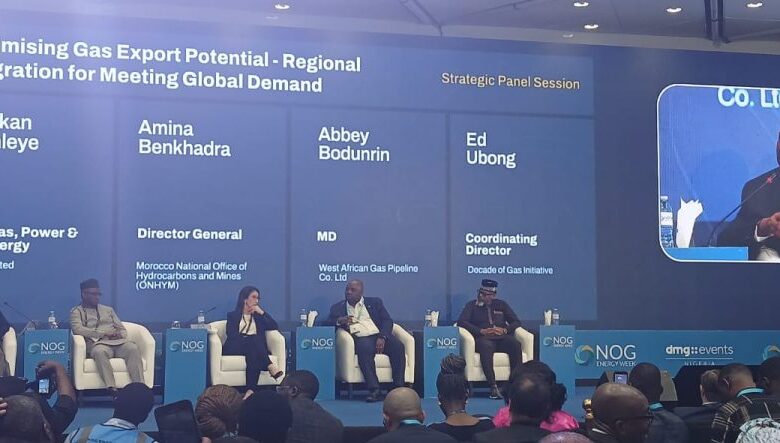
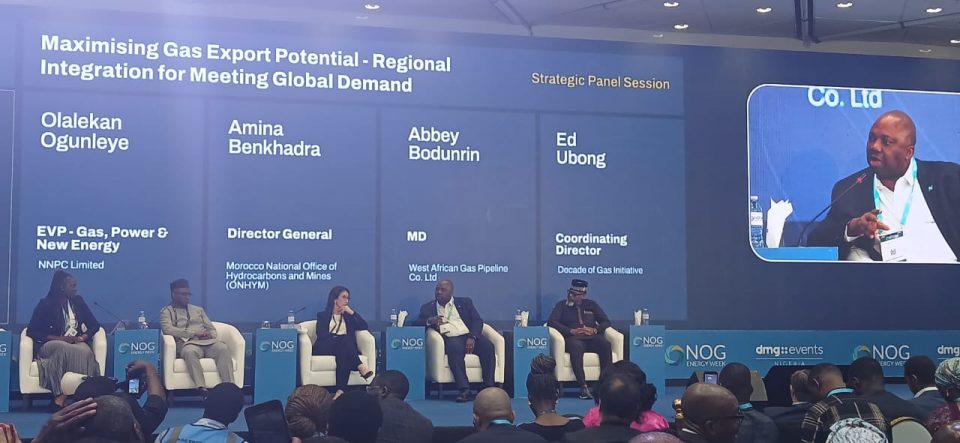
Speaking as a panelist at the ongoing 2026 Nigeria Oil and Gas (NOG) Week in Abuja on Tuesday, Ubong told industry leaders that while production and reserves are growing, the true test will be whether gas translates into electricity and affordable LPG for ordinary Nigerians.
“It is always a pleasure to have a panel that not only focuses on Nigeria but also looks across the wider region,” Ubong said.
According to work done by the Decade of Gas Secretariat with key stakeholders, gas demand is expected to grow to about 15 bcf per day between now and 2030.
That outpaces current supply projections. The Executive Vice President, Gas, Power and New Energy at NNPC Limited has projected gas supply growth to about 12 bcf per day.
“For gas molecules to be secure, we must first step back and ask ourselves a fundamental question: Is there credible demand?” Ubong asked. “That growth is being driven by credible demand, which is split between domestic and export markets.”
On exports, he noted Nigeria’s gas supply is back to five-year highs, driven by “significant work” by Renaissance Africa Energy Company, which has increased gas supply to Nigeria LNG (NLNG).
Domestically, supply has crossed 2 bcf per day. “Excellent work is being done by companies such as Seplat Energy and others. We are reaching new heights both in domestic supply and exports, and this progress is expected to continue,” he said.
Citing data from the Nigerian Upstream Petroleum Regulatory Commission (NUPRC), Ubong said Nigeria’s gas reserves have grown to about 215 trillion cubic feet (tcf). Year-to-date gas production stood at approximately 7.87 bcf per day as of the end of May.
“What is particularly encouraging is that we are proving more reserves. Reserves are increasing, gas production is increasing, and gas flaring percentages are declining. That is the balance we must sustain as we work towards our target of 12 bcf per day.”
Ubong outlined three infrastructure priorities. He commended the EVP for “successfully delivered 2 bcf per day safely,” saying it shows the supply and demand sides of the market are “now increasingly connected.”
The second priority is getting gas to Abuja this year. “This is important because it reinforces the credibility of the Ajaokuta-Kaduna-Kano (AKK) Gas Pipeline Project,” he said. To maintain pressure across the network, including in the eastern part of the country, Lagos, Togo and Ghana, compressor stations “must be commissioned. The equipment is already in the country, and there is a commitment that these compressors will become operational this year.”
Regionally, he said the African Atlantic Gas Pipeline (AAGP) must be developed and the West African Pipeline (WAPCo/WAGP corridor) extended “potentially towards Côte d’Ivoire, as regional gas infrastructure expands toward Morocco.”
He said the focus aligns with both the National Gas Master Plan and the Decade of Gas Initiative ahead of the 2030 targets.
On supply, Ubong said more than 20 projects are expected to add an additional 4.6 bcf per day to the current 7.87 bcf per day, bringing production closer to the 12.6 bcf per day target. Several Final Investment Decisions (FIDs) have already been announced.
“I am looking at some of our industry leaders in the room and hoping that before the next quarter ends, another FID will be announced, bringing even more supply into the market.”
On pricin, he said ‘Gas is one product that has remained unregulated’
The panel then turned to pricing. Ubong gave “special recognition” to the Nigerian Midstream and Downstream Petroleum Regulatory Authority (NMDPRA), saying “we believe the current pricing framework is moving in the right direction.”
But he posed three questions: “Is the gas price at the right level to support investment on the supply side? Does it remain affordable for Nigerians? Does it also provide sufficient incentives for exports to continue?”
“The market remains regulated, but we look forward to a future where it becomes fully commercialised and operates on a willing-buyer, willing-seller basis.”
Ubong stressed that gas “must translate into increased electricity supply” to close Africa’s energy deficit. He said government is taking “an aggressive approach to resolving longstanding issues affecting gas-to-power projects” and noted the appointment of a new Minister of Power and a new Special Adviser on Power.
On cooking gas, he was direct; “Cooking gas must also remain affordable and accessible. LPG remains one of the products most directly felt by ordinary citizens. We have seen price fluctuations linked to global developments, including tensions and conflicts in the Gulf region.”
He said he has “closely followed the clear directives of the Honourable Minister of State for Petroleum Resources (Gas), who has consistently emphasised the need to ensure affordability and accessibility.”
“We must continue monitoring prices to ensure that households can afford cooking gas.”
As part of that push, the government plans to place five million LPG cylinders in the hands of women in rural communities between now and 2030, about one million cylinders annually.
Ubong said all initiatives are being coordinated through the Decade of Gas platform, which brings CEOs together “to identify challenges and agree on practical solutions.”
“This week, we will circulate a communiqué to countries across the West African region outlining how we can collaborate to aggregate demand, aggregate supply, and continue developing the infrastructure required to achieve our shared goals.”
NOG Week 2026 continues in Abuja with sessions focused on investment, policy, and regional gas integration.