Traditional policing no longer enough to tackle trafficking networks, Spanish investigator warns

By Prosper Okoye
Traditional policing is no longer sufficient to combat increasingly sophisticated human trafficking networks, a Spanish police inspector has warned, saying organised criminal groups are adapting faster than many law enforcement agencies can respond.
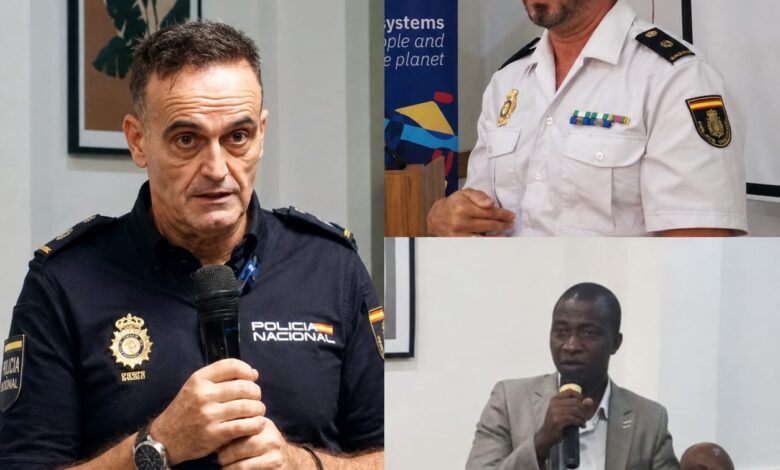
Javier Leon, a serving officer of the Spanish National Police and Deputy Team Leader of the Foundation for the Internationalisation of Public Administrations (FIAP) under the European Union Support to Migration Governance in Nigeria Project (Component 3), made the remarks during a four-day workshop on Strengthening Transnational Investigative Cooperation: Combating Trafficking in Persons (TIP) and Smuggling of Migrants (SOM) through the Nigeria–Spain Strategic Partnership.
Drawing on more than a decade investigating irregular migration and human trafficking in Spain’s Canary Islands, Leon said criminal organisations have transformed the way they operate, forcing investigators to move beyond conventional policing methods.
“Organised crime is constantly evolving,” he told participants. “If we continue using yesterday’s methods, we will struggle to stop today’s criminal networks.”
Leon said many organised crime groups now operate through decentralised, semi-autonomous cells that continue functioning even when individual members or units are dismantled, making investigations more complex.
He said the networks increasingly exploit cryptocurrency to move illicit funds, recruit victims through social media, forge travel documents, abuse legitimate migration channels and collaborate with criminal organisations across several countries.
According to Leon, these developments have turned trafficking investigations into complex international operations requiring intelligence-led policing, financial investigations, digital evidence and close cooperation between countries.
Drawing on cases investigated in Spain, Leon said Nigerian organised criminal groups remain among the most active transnational networks involved in trafficking in persons and the sexual exploitation of women in Europe.
He said several internationally active Nigerian criminal organisations have historical roots in university confraternities, although he stressed that the original confraternities were not created for criminal purposes. Over time, however, some splinter groups evolved into organised criminal networks operating across multiple countries.
Rather than specialising in a single offence, Leon said many of the groups diversify into human trafficking, drug trafficking, cybercrime, money laundering, extortion and document forgery, making them more resilient and difficult to dismantle.
He identified decentralisation as one of the greatest challenges facing investigators.
“Removing one cell rarely disrupts the entire organisation,” he said. “The network simply continues operating through other cells.”
Leon said trafficking in persons remains one of the most profitable activities for these criminal organisations.
According to him, many victims are recruited with promises of employment, education or better opportunities abroad before being subjected to sexual exploitation.
Recruitment often involves trusted relatives, neighbours, friends or former victims, while many victims are allegedly subjected to traditional oath-taking rituals before leaving Nigeria.
Although such rituals are often poorly understood by investigators outside Africa, Leon said they can have a profound psychological effect on victims, discouraging them from cooperating with police or giving evidence in court.
Spanish authorities seek to overcome those barriers by offering victims legal protection, documentation and specialised support services, he said, but successful prosecutions remain difficult when victims fear reprisals or refuse to testify.
Leon said trafficking routes have also evolved.
While many victims previously travelled through Niger and Libya before attempting dangerous Mediterranean crossings into Europe, criminal networks are increasingly using commercial air travel, forged documents and fraudulent visas to move victims across borders.
Recalling a recent journey through Nnamdi Azikiwe International Airport in Abuja, Leon said the travel patterns of several young women he observed raised concerns, based on his professional experience, that they could have been potential trafficking victims. He stressed that the observation reflected his professional assessment and illustrated how trafficking methods continue to change.
He said no single country could effectively combat such networks in isolation.
“Human trafficking is not simply a migration issue,” Leon said. “It is a global criminal enterprise that exploits vulnerable people for profit. Our response must therefore be intelligence-led, coordinated across borders and focused on protecting victims.”
Also speaking, Luis Puig, Interior Attaché at the Spanish Embassy in Nigeria, said Spain and Nigeria shared a common responsibility to combat organised crime while protecting vulnerable people.
“Our shared commitment is not just to fight crime but to protect people,” he said. “Behind every trafficking case are vulnerable individuals whose lives have been affected, and our responsibility is to bring those responsible to justice.”
Puig said effective policing depended not only on investigations but also on public confidence, urging law enforcement agencies to strengthen long-term community engagement so that victims and witnesses feel safe reporting crimes and cooperating with investigators.
Drawing on Spain’s experience, he said public trust in policing had taken decades to build through professionalism, accountability and continuous training.
“Trust cannot be built overnight,” he said. “It requires professionalism, accountability, continuous training and sustained engagement with the communities we serve.”
Responding, CSP Bala Elkana of the Force Criminal Investigation Department in Abuja said dismantling trafficking and organised crime networks required stronger intelligence gathering and investigations within Nigeria.
He said tackling the groups from their operational base would provide investigators with deeper intelligence and strengthen cooperation with international partners in disrupting transnational criminal networks.
The workshop brought together Nigerian and Spanish law enforcement officials under the Nigeria–Spain Strategic Partnership to strengthen cross-border cooperation against trafficking in persons and the smuggling of migrants, as both countries seek to improve intelligence sharing and joint investigations against organised crime.