
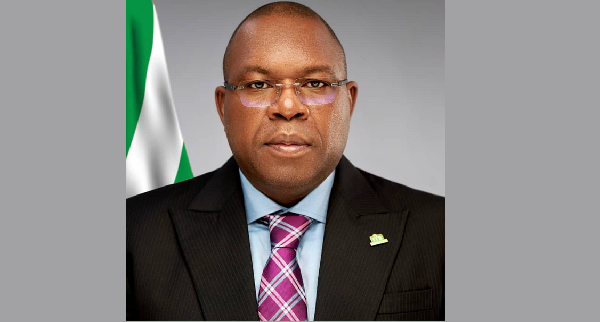
The 23 states that provided revenue data to the Joint Revenue Board (JRB) recorded a 27 per cent increase in collections between January and June 2026 compared with the same period last year, the board’s Executive Secretary, Olusegun Adesokan, has said.
He attributed the growth to ongoing tax reforms aimed at improving revenue collection, reducing multiple taxation and ensuring that higher-income earners pay their fair share without placing unnecessary burdens on low-income Nigerians and small businesses.
Adesokan, who spoke at a press conference in Abuja on Wednesday, said early results showed governments could improve revenue mobilisation by strengthening tax administration and bringing more eligible taxpayers into the tax net, rather than imposing additional taxes on people struggling to make ends meet.
He said the reforms were designed to shift the burden towards those with greater capacity to pay while allowing ordinary Nigerians and small businesses to retain more of their earnings.
The JRB chief said the reforms were also beginning to address longstanding complaints about multiple taxes, confusing levies and unauthorised collections by individuals and groups operating on behalf of, or claiming to represent, government authorities.
One major development, he said, was the adoption of the harmonised taxes and levies law by 21 states as of Tuesday evening. The legislation is intended to establish a common framework for tax administration across states and local governments.
The law, developed by the JRB in collaboration with the Presidential Committee on Fiscal Policy and Tax Reforms, seeks to consolidate more than 50 different tax and levy collection items into nine standard categories.
Adesokan said the objective was to eliminate overlapping charges, reduce confusion and make it easier for businesses to understand their tax obligations wherever they operate in the country.
He explained that the framework would also help address situations where businesses and traders face repeated payment demands under different names for similar services or activities.
The nine categories cover major areas such as income tax, stamp duty, property tax, road-related charges, employment-related levies, user charges and daily market ticketing, among others.
He said the aim was to ensure states and local governments operate within a clearer, more consistent framework, adding that wider adoption would make it easier for businesses to plan their activities and control operating costs.
However, Adesokan acknowledged that implementation was still ongoing, as the legislation had to pass through state assemblies and undergo the required consultations with relevant stakeholders.
He said the National Economic Council had also identified harmonisation of taxes and levies as one of its priority areas, with further action expected under a 90-day plan.
According to him, the JRB is working with state revenue authorities, local governments and other relevant agencies to ensure that the reforms are implemented effectively.
Another major aspect of the initiative is a planned crackdown on illegal tax collectors operating along Nigeria’s road transport corridors.
Adesokan said the board was working with the police and other relevant authorities to stop unauthorised collections, roadblocks and the harassment of motorists by individuals and groups without lawful authority.
He described the practice as a longstanding problem that increases the cost of transporting goods and doing business.
He said the additional charges imposed on transporters can increase distribution costs and ultimately affect the prices consumers pay for food, manufactured goods and other essential items.
“We are working with the police to eliminate these men completely from our road transport corridors,” he said, explaining that the proposed enforcement arrangement would extend to local government areas.
He added that the board was developing a coordinated approach involving relevant authorities to deal with illegal collections and ensure that legitimate revenue payments were made through recognised channels.
Adesokan said the problem could not be eliminated overnight because the practices had existed for decades, but assured Nigerians that the authorities were working towards ending them.
He appealed to the media and the public to report incidents and provide specific details that could help authorities identify and prosecute offenders.
The JRB executive secretary also urged Nigerians to verify the legality of tax demands before paying, particularly when collectors direct them to pay into accounts that cannot be clearly linked to the relevant government authority.
He advised taxpayers to contact the appropriate tax office whenever they are uncertain about the validity of a levy.
Adesokan stressed that the reforms were not intended to introduce additional taxes but to simplify the existing system, improve compliance, and ensure transparent revenue collection.
“With this reform, the government has not introduced any new tax. No new tax has been introduced. Rather, we have harmonised multiple tax systems,” he said.
He explained that the reforms were necessary because Nigeria’s previous tax framework consisted of fragmented laws and administrative arrangements that often created confusion for taxpayers.
The new framework, he said, was intended to modernise tax administration, improve the use of technology and bring greater consistency to the assessment and collection of revenue across the country.
Adesokan said the government’s broader objective was to build a fairer system that supports economic development rather than discouraging investment or placing excessive pressure on people with limited incomes.
He said the revised personal income-tax regime was one measure designed to leave more money in the hands of lower-income earners.
Under the new schedule presented by the JRB, the first N800,000 of taxable income attracts a zero per cent rate, while higher income bands are taxed at progressively higher rates, reaching a maximum of 25 per cent.
He said the revised structure was intended to reduce the burden on people earning modest incomes while ensuring that wealthier individuals contributed more in line with their ability to pay.
The presentation also included an illustration of an individual earning N20 million annually. Based on the assumptions used, Adesokan said the person could retain more income under the new system, with the potential savings approaching N1 million a year.
He explained that the amount of tax payable depends on eligible deductions, which are taken into account before the final tax liability is calculated.
Such deductions may include qualifying pension contributions, insurance premiums, mortgage interest and other reliefs allowed under the applicable rules.
Adesokan urged workers to examine their payslips to understand how the new tax provisions affect their take-home pay.
He also cited data from 23 states which, according to him, showed that lower-income earners were benefiting from reduced tax liabilities. In one state with a large taxpayer population, he said 98.2 per cent of income earners were paying lower- or zero-income tax under the new arrangement.
He added that the board was focusing on improving compliance among higher-income earners and other taxpayers with the capacity to pay.
The JRB chief also highlighted tax reliefs for small businesses in the informal sector, saying qualifying businesses with annual turnover of up to N3 million were exempt from income tax under the regulations he discussed.
He listed roadside food vendors, barbers, tailors, cobblers and other small operators among those the policy was intended to protect.
He said tax officials should not burden people who were merely trying to earn a living, adding that public education was needed to ensure eligible businesses understood their rights under the new system.
Adesokan said the National Tax Identification system, developed in collaboration with the Nigeria Revenue Service and state revenue authorities, would further improve tax administration by connecting taxpayer records across different jurisdictions.
The system is intended to make it easier for authorities to verify tax compliance and reduce the administrative problems that arise when individuals or businesses operate in more than one state.
He said the system would also limit unnecessary demands for tax documents and reduce the risk of duplicate assessments caused by difficulties in confirming taxpayers’ records.
The board is also encouraging revenue authorities to conduct joint tax audits where appropriate, instead of requiring businesses to respond to separate visits by different agencies at different times.
Adesokan explained that repeated audits can consume staff time, require companies to prepare extensive documents and disrupt normal business operations.
Under the proposed arrangement, federal and state revenue authorities would coordinate their activities while respecting their separate responsibilities under the law.
He said businesses needed a stable operating environment to grow, create jobs, and generate the income needed to pay taxes.
During the question-and-answer session, Adesokan also addressed concerns about property-related charges imposed on retired homeowners.
He said some states provide exemptions for retirees living in residential properties they occupy themselves but noted that the applicable rules vary according to the relevant laws.
He promised to seek clarification on the provisions applicable in the Federal Capital Territory, particularly where retirees live in their own homes and depend on limited pension income.
He did not announce a blanket exemption for all retired homeowners, but said the issue required further examination under the applicable legislation.
Adesokan further explained that the JRB does not directly collect taxes. Its role, he said, is to coordinate revenue administration and promote uniformity, fairness and transparency among the federal and subnational revenue authorities.
He said better coordination, improved compliance and more effective use of technology should help governments generate the resources needed for infrastructure and public services.
However, he acknowledged that Nigeria’s development needs remained substantial and that stronger revenue mobilisation had to be accompanied by responsible management of public funds.
He said the ultimate measure of success would be the extent to which the reforms helped businesses grow, created employment opportunities and improved the welfare of Nigerians.
Adesokan urged taxpayers, businesses and the media to support implementation by raising public awareness, reporting illegal collections and helping ensure the new framework is properly understood.
He said the reforms would take time to deliver their full benefits, but he expressed confidence that wider adoption of the harmonised tax system would reduce unnecessary charges, improve the business environment, and support economic growth.