
2027: Reps invite INEC chairman over preparations, security concerns

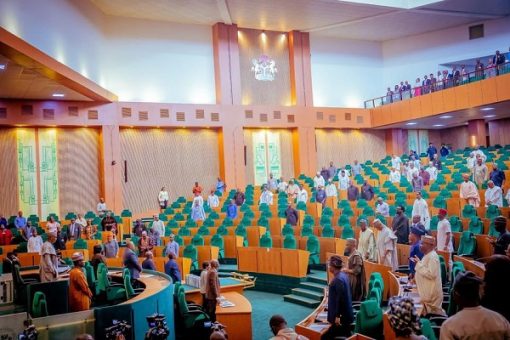
The House of Representatives on Wednesday invited the Chairman of the Independent National Electoral Commission (INEC), Prof. Joash Amupitan, to appear before its Committee on Electoral Matters to brief it on preparedness for the 2027 general elections and its readiness to ensure no Nigerian is disenfranchised due to insecurity.
The House said the INEC Chairman should appear before its committee within the next seven legislative days to speak on the “Commission’s readiness for the 2027 General Elections, Continuous Voter Registration, PVC management, election logistics, technology deployment (BVAS and IRev), personnel training, electoral security, risk assessment strategies, budget implementation, and insights from the recent Ekiti State and Osun Governorship Election”.
In a resolution following a motion by Minority Whip Mansur Manu Soro and Deputy Minority Leader Abdulsamad Dasuki, the House said the Chairman is also expected to “provide a detailed status report regarding the National Election Readiness. This includes the progress of continuous voter registration, the status of PVC production and distribution, the readiness of election technology and logistics, mapping of challenging areas, recruitment and training status of election officials and Budgetary appropriations, funds released, outstanding releases and the implications of any funding gaps on implementation timelines”.
Although the original prayer of the motion was for the INEC Chairman to appear before the entire House at plenary, Deputy Speaker Benjamin Kalu said there was no need for the Chairman to appear before the House, as it would amount to a vote of no confidence in the House Committee overseeing the Commission.
Kalu said that, from the content of the motion, it was obvious that the sponsors had not listened to the recent briefing by the INEC Chairman, in which he outlined the Commission’s preparations for the 2027 elections and how it was dealing with the challenges.
The Deputy Speaker said, “While I agree that such oversight should be carried out, I believe that the oversight should be by the committee of the house that has been given this responsibility to do so. That is why I do not support the players of this motion, because supporting the players of this motion belittles the mandate of the committee set up to carry this motion.
“Inviting the chairman of INEC to come and brief the house, when he just finished briefing the nation, is not ideal. Don’t we believe in our committees again? Our committees are there, charged with the responsibility. The chairman and members of this committee are well-educated and well-informed to carry out their decisions”.
Speaker of the House, Abbas Tajudeen, explained that the parliament was not against the motion to invite the INEC Chairman, but against inviting him to plenary. The argument is that he should go to the committee and any member who is interested in the briefing should attend the committee sitting.
“The Committee should invite the Chairman and advertise the date of his appearance so that members who wish to attend and ask questions can do so.”
Presenting the motion for the House’s approval, Manu Soro said that, pursuant to Sections 76, 116, 132 and 178 of the Constitution of the Federal Republic of Nigeria, 1999 (as amended), Part I of the Third Schedule to the Constitution, and the Electoral Act, 2026, the Independent National Electoral Commission (INEC) is constitutionally mandated to organise, undertake and supervise elections to elective offices in Nigeria.
According to him, the credibility, transparency and acceptability of the 2027 General Elections depend significantly on the Commission’s preparedness in voter registration, education, logistics, technology, personnel training, security coordination, funding, and the timely implementation of the election timetable.
He maintained that the recently concluded Ekiti and Osun State Governorship Elections offered useful lessons on election administration, technology deployment, logistics management, stakeholder engagement, security, and voter participation, which should guide preparations for the forthcoming General Elections.
He said, “Voter registration reports from Continuous Voter Registration (CVR) centres in Nigeria highlight challenges including inadequate registration equipment, limited staff, network issues, prolonged waiting times, and increased demand from citizens wishing to register or manage their voter records.”
“These operational difficulties particularly affect first-time voters, rural citizens, individuals with disabilities, students, and workers, limiting their access to registration and threatening the participation of eligible voters in the electoral process without timely interventions.”
“Early institutional preparedness is crucial for timely procurement of election materials, deployment of technology, recruitment and training of personnel, effective voter education, security planning, electoral risk assessment, and logistics nationwide.”
He expressed concern that delays in addressing operational gaps in voter registration, logistics, technology deployment, and funding may undermine public confidence in the electoral process and compromise the peaceful conduct of the 2027 General Elections.
He stressed parliament’s constitutional oversight responsibility to ensure that public institutions entrusted with critical national assignments are adequately prepared, properly funded, and fully accountable in discharging their constitutional responsibilities.
He acknowledged INEC’s continuous efforts to strengthen Nigeria’s electoral system while recognising the need for sustained parliamentary engagement to guarantee free, fair, credible, inclusive, and peaceful elections.
In his contribution to the motion, co-sponsor Abdulsamad Dasuki said they were asking for what was in Nigerians’ interest, especially at a time when insecurity is ravaging the country, adding, “This is the very first time we are going into an election with 11 months of security concerns.”
He said members of the House have presented about 255 security-related motions, insisting that some parliamentary constituencies and units will not be able to participate in the election, and that only the INEC Chairman can answer his question.