
Population pressure, housing shortage in Nigeria’s urban cities and the way forward

File image
With about 220 million people and annual growth rate of 2.5 percent, Nigeria is reputed as one of the fastest growing countries in the world. Nigeria’s population is projected to hit 407 million by 2050, making it the third largest country in the world, after China and India.
According to the World Bank’s 2023 data, 54.283 percent of Nigeria’s population lives in urban centres with massive infrastructural deficits, hunger and abject poverty, increasing housing inflation as the consequences. The population data evidently showed that, as with the present situation, Nigeria’s population pressure is expected in full swing in urban cities, and if we go with the present percentage of Nigeria’s population dwelling in urban centres, by year 2050 about 221 million people will be living in the cities of Lagos, Kano, Abuja, Port Harcourt and Ibadan.
These statistics paint a picture of hope and disaster for Nigeria’s future. In terms of hope, the abundance of youthful, healthy and educated population could be a powerful engine for unprecedented economic growth and by implication, a more prosperous nation. Conversely, it could exert more pressure on the already complicated infrastructural shortages, high unemployment, widespread hunger and increasing poverty, especially in the urban centres, catalyzing more violence, chaos, terrorism and all manners of criminal tendencies.
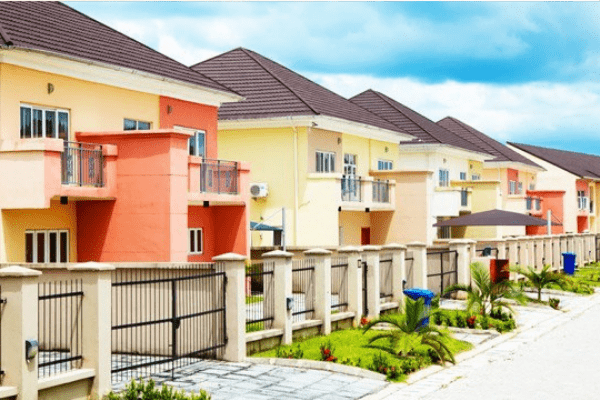
Global statistics about housing deficit in Nigeria is alarming and frightening. As of 2007, Nigeria already had a housing shortage of 700,000 units annually, which means that, if the trend follows the pattern of population growth, housing shortage would currently revolve around 1.3 million units annually. With the current neglect of mass housing development across Nigeria’s urban landscapes, the realisation of mass housing provision is nothing but a mirage. In actual fact, the realisation could best be described as “abrakadabra”, the more you look, the less you see.
In Nigeria today, there are two broad categories of the causes of mass housing shortage. The first category lies with structural problems, such as growing population in both rural and urban centres, especially from the rural end; unchecked rural-urban migration (as occasioned by the forces of terrorism, uneven provision of public amenities, the perennial herders-farmers clashes), and government’s abandonment of mass housing provisions. The second category lies with the private sector. Most private developers are not bothered about housing the poor. Their focus is on profits, which only the financially able and willing few are able to provide. Surprisingly, the type of housing that is affordable for the poor are under-supplied (in terms of production), and the ones that have been built in the days of independence are now being demolished to give way for modern houses, which comes with exorbitant prices.
Accommodation for the poor and the less privileged people is not part of planning in virtually all the Nigerian urban centres. While efforts are ongoing in Lagos State through various ministries, agencies and departments to keep rolling out what is termed low-cost housing, the cost of production, politicised allocations and lack of mortgage facilities have caused the developments to end up with people who have more houses than some local government secretariats in Nigeria.
Governments, at all levels, have not shied away from this ugly situation. In response to the crisis rocking mass housing provisions in Nigeria, there have been various policy efforts at multiple levels at rescuing the poor from living in the open. Such policies, no matter how brilliant, have encountered severe challenges, ranging from policy somersault to lack of continuity. The reality on ground points to no tangible results, despite so much media hype across the media establishments.
The question is: why is mass housing provision important? The provision of mass housing goes to the root of Nigeria’s economic recovery. The population that has been unhoused, pre, during and post-independence cannot make meaningful contributions to economic growth. The movers of the Nigeria’s economy, the poor masses who actively play in the market systems through production, distribution and consumption of goods and services deserve better quality of life as simply defined by their accommodation, environment and health.
Going forward! The solutions to the problem of housing shortages in Nigeria should not be simple, neither should they be complex. They should, among other things, be consistent, focused, targeted and be measurable. In order to deliver mass housing to the poor, the rich, and everyone, there must first be collaboration between the government and the private sector. This is because no singular entity can solve our age-long housing problem. Furthermore, credit system should be provided and strengthened to accommodate everyone working or earning income, no matter how little. The Federal Government should do all within its power to discourage rural-urban drifts. Mass housing provision should be systematised in a way that will make it affordable, by reducing the cost of production.
The challenges of mass housing in Nigeria, though gargantuan, are not impossible to solve. It calls for a clear vision, sincerity of purpose and collective action. While government sets the policy tone and deliverable mechanisms for achieving mass housing for Nigerians, private developers should reduce their chase after profits, and build what will drive the economy positively. A decent home for every Nigerian should not remain a dream, it must become a reality.