
Niger Delta Communities Urge Tinubu to Renew Pipeline Security Contract, Expand PINL Operations

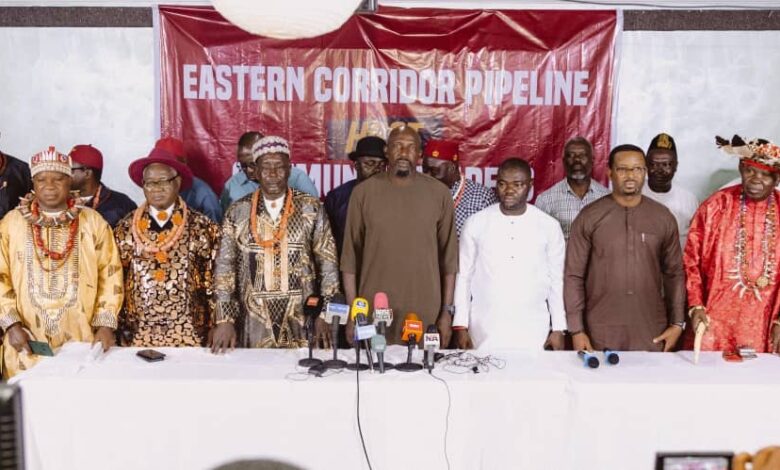
Host communities along the Trans Niger Pipeline (TNP) have called on President Bola Tinubu and key federal authorities to renew and expand the surveillance contract awarded to Pipeline Infrastructure Nigeria Limited (PINL), citing the company’s pivotal role in improving security, oil output, and community relations across the Eastern Corridor.
At a press briefing held in Port Harcourt, the Pipeline Host Ethnic Nationality Leaders of the Eastern Corridor — representing communities across Abia, Bayelsa, Imo, and Rivers States — urged the Federal Government to sustain its partnership with PINL and broaden the firm’s mandate in the region.
Spokesman Famous Daunemigha, speaking on behalf of the stakeholders, praised PINL’s grassroots engagement strategy, noting that its collaboration with traditional rulers, youth groups, and community development committees has resulted in enhanced security and near-total crude oil delivery via the TNP — which previously stood at zero due to vandalism and theft.
“Through monthly stipends and direct partnerships with local leaders, communities now feel a sense of ownership over the pipeline,” Daunemigha said. “That has drastically improved security and production.”
He was joined by ethnic representatives from Ijaw, Ogoni, Eleme, Andoni, Bonny, Egbema, Ukwa, Ikwerre, and other groups who echoed support for PINL, attributing recent progress in the Niger Delta to the company’s strategic collaboration with security agencies and inclusive local engagement.
Since PINL took over surveillance duties, crude oil flow through the pipeline — once crippled by sabotage and illegal refining — has reportedly returned to near 100% capacity.
Beyond security, the stakeholders highlighted the company’s significant corporate social responsibility initiatives. In 2024 alone, PINL delivered hundreds of millions of naira in flood relief to affected communities in Bayelsa and Rivers States, distributed food packages during the festive season, and supported skills acquisition and scholarship programmes.
The group also credited PINL with helping to mediate long-standing community disputes, fostering inclusion of previously marginalized groups within its operations.
Victor Udoh, Convener of the Niger Delta Progressive Alliance, called for institutional support from the Federal Government to solidify the contract and expand PINL’s scope.
“The Armed Forces are constitutionally mandated to protect national assets, but past experiences showed limited success,” Udoh said. “The synergy between PINL and government forces has delivered real results. This model must not only be retained but scaled up.”
He urged the National Security Adviser and Niger Delta Development Commission (NDDC) to prioritise continuity, arguing that as long as PINL remains effective, the Federal Government must back its operations with stronger policy frameworks.