
Nigeria vs France: Juventus, Real Madrid, PSG, Chelsea stars invited for Super Falcons friendly

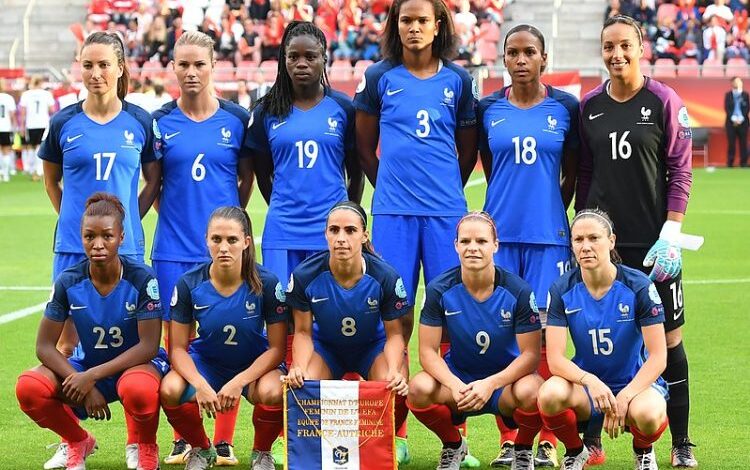
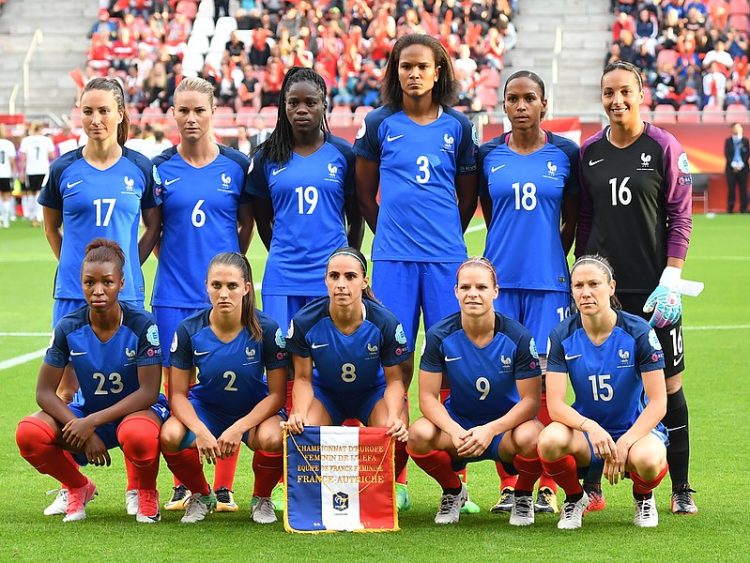
The French Football Federation has unveiled a 30-player squad for upcoming international friendlies against Nigeria and Spain, set for next week.
The team features four goalkeepers, ten defenders, eight midfielders, and eight attackers, including stars from Juventus, Real Madrid, PSG, and Chelsea.
Nigeria’s goalkeeper, Chiamaka Nnadozie, will come up against her Paris FC teammates Lou Valérie Bogaert and Clara Matéo.
Midfielder Jennifer Echegini will face as many as eight PSG colleagues, including Élisa De Almeida, Jade Le Guilly, and Griedge Mbock Bathy.
Ifeoma Onumonu, Nigeria’s striker, is likely to meet her Montpellier teammate Justine Lerond in goal.
France will be led by Laurent Bonadei, the interim head coach who succeeded Hervé Renard.
The squad boasts experienced names like Juventus defender Estelle Cascarino, Real Madrid’s Maëlle Lakrar and Sandie Toletti, and Chelsea duo Sandy Baltimore and Oriane Jean-François.
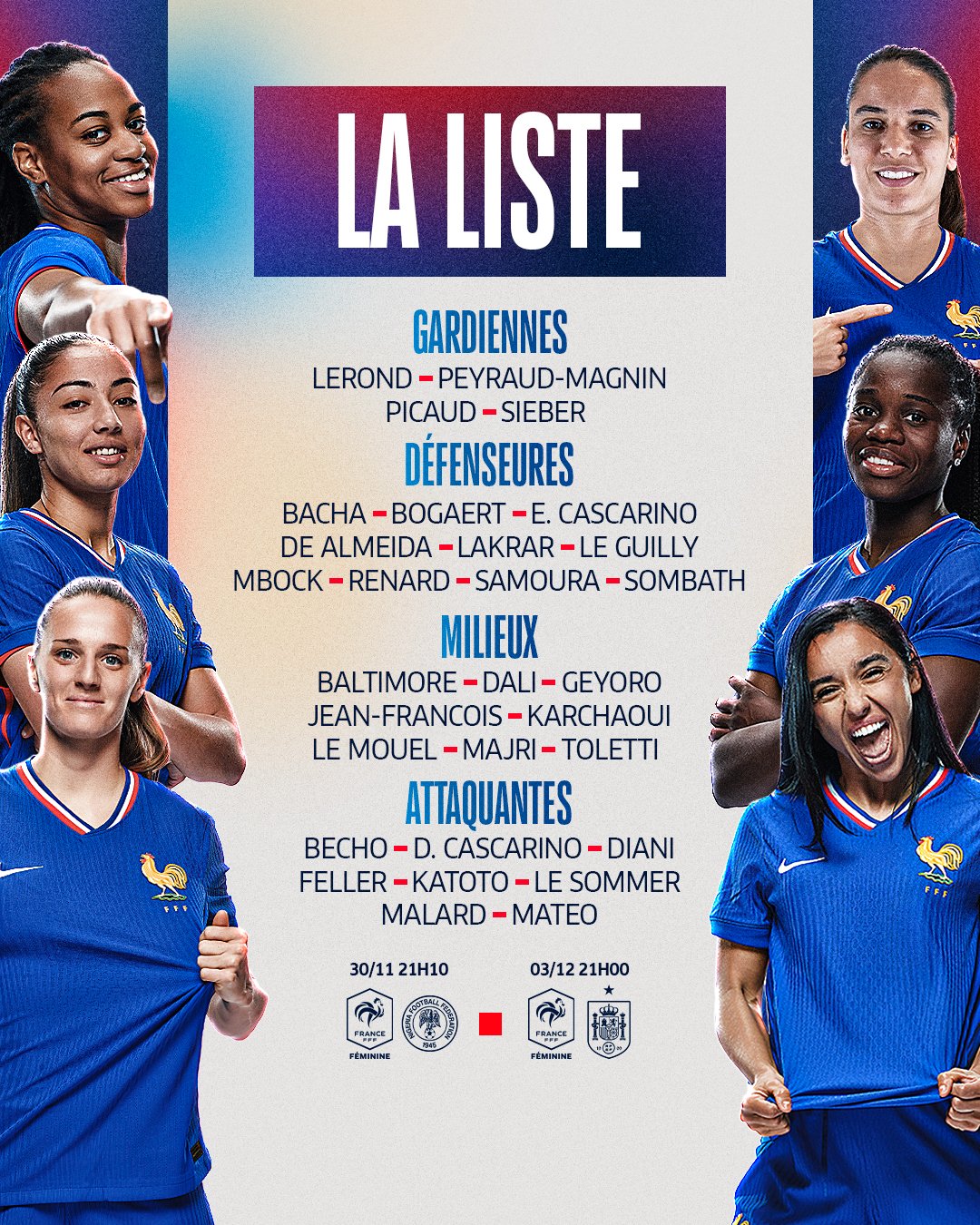
The clash against Nigeria, scheduled for November 30 at Stade Raymond Kopa in Angers, France, serves as a tune-up for Les Bleues ahead of the UEFA Women’s Nations League and the 2025 UEFA Women’s Championship.
For Nigeria, it is another step in rebuilding after Randy Waldrum’s departure and disappointing Olympic performances.
Interim coach Justin Madugu is expected to announce a strong Super Falcons squad featuring new faces as the team eyes the 2025 Women’s Africa Cup of Nations.
Meanwhile, France’s selection highlights their wealth of talent, with key players like Wendie Renard, Kadidiatou Diani, and Eugénie Le Sommer ready to feature.
As of press time, Nigeria has not released their squad for the highly anticipated friendly.
Full France Squad:
Goalkeepers
- Justine Lerond, Montpellier
- Pauline Peyraud-Magnin, Juventus
- Constance Picaud, Fleury
- Marie-Morgane Sieber, Guingamp
Defenders
- Selma Bacha, Olympique Lyonnais
- Lou Valérie Bogaert, Paris FC
- Estelle Cascarino, Juventus
- Élisa De Almeida, PSG
- Maëlle Lakrar, Real Madrid Femenino
- Jade Le Guilly, PSG
- Griedge Mbock Bathy, PSG
- Wendie Renard (captain), Olympique Lyonnais
- Thiniba Samoura, PSG
- Alice Sombath, Olympique Lyonnais
Midfielders
- Kenza Dali, Aston Villa
- Grace Geyoro, PSG
- Sandy Baltimore, Chelsea
- Oriane Jean-François, Chelsea
- Margaux Le Mouël, Paris FC
- Sakina Karchaoui, PSG
- Amel Majri, Olympique Lyonnais
- Sandie Toletti, Real Madrid Femenino
Attackers
- Vicki Bècho Desbonne, Olympique Lyonnais
- Delphine Cascarino, San Diego Wave
- Kadidiatou Diani, Olympique Lyonnais
- Clara Matéo, Paris FC
- Melvine Malard, Manchester United WFC
- Eugénie Le Sommer, Olympique Lyonnais
- Marie-Antoinette Katoto, PSG
- Naomie Feller, Real Madrid Femenino