
Deploying Drones, Using Satellite Surveillance Systems Will Minimise Pipeline Vandalism — Ogbeifun

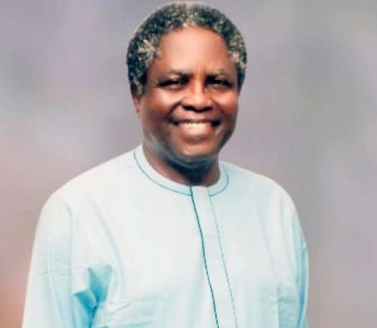
In this interview, former President of Petroleum and Natural Gas Senior Staff Association of Nigeria, Dr. Brown Louis Ogbeifun, discusses with MOHAMMED SHOSANYA, issues in the recent Venezuela’s upheaval, implications for global oil market, Nigeria’s energy sector and how best to reposition it for value addition. Excerpts:
The global campaign to adopt the energy transition is gaining momentum. Does Nigeria need to transition with the rest of the world, and what will happen to our fossil fuels and the revenue they generate after the energy transition succeeds?
I understand how Nigerians feel about this issue because Nigeria is a fossil‑fuel economy in a world actively planning for life after fossil fuels. I think the question should be “How do we transition without collapsing our revenue base and our social fabric?”
My take is that we should transition, but not necessarily in the way advanced nations do, because fewer investors are willing to fund fossil fuel projects, and our only bet for transitioning is to use oil as a divestment instrument. We can transition on our terms, at a pace aligned with the just transition.
If the world successfully transitions without us, we are likely to be denied climate and concessional financing and to face a myriad of trade barriers.
We are also expected to be less competitive. Although our oil reserve will still be there and available for the markets, it will be locked in as stranded assets, and the crude will be technically unproductive and economically not sound because its market value will drastically reduce
How would you react to the fact that the NNPC subsidiaries’ debt has ballooned to N30 trillion despite their transition to a commercial entity a few years ago?
The Petroleum Industry Act granted NNPCL autonomy, and the Act has not yet been fully implemented. Within this framework, although the NNPCL is a commercial entity, it remains a work in progress for several reasons.
To that end, we should avoid being too hasty in our assessment of its performance while maintaining a balanced view of an organization that is still in transition.
Although internal debt for NNPC subsidiaries and its parent company is alleged to have grown to about N30 trillion, NNPCL reported a healthy overall balance sheet, with a profit after tax of N5.4 trillion in 2024.
I believe that, with the reforms being pursued by the Ojulari-led NNPCL, the SBUs would, by 2026, fully adhere to private-sector financial discipline, undertake strategic refinery restructuring to optimise productivity, ensure that intercompany payment timelines align with best practices and external benchmarks, separate legacy debts from the new company’s debts, ringfence funds for the latest company’s payments so they do not cloud objective assessments of the current financial performance of the various subsidiaries, and conduct periodic internal audits.
The Dangote refineries and marketers have been embroiled in severe controversies over pricing, distribution, and subsidies. Suggest ways to put the controversies behind us with a view to ensuring cheaper and more accessible fuel in Nigeria.
The controversies between Dangote Refinery, petroleum marketers, government agencies, and oil and gas in-house unions over pricing, distribution, subsidies, and unfair labor practices reflect structural problems in Nigeria’s downstream petroleum sector that go beyond personality or corporate conflicts.
Some of the disputes stem from perceptions of unclear rules of engagement, policy reversals, distrust, and each organization within the value chain seeking a comparative economic advantage over others. For example, Dangote advocates regulatory fairness and appropriate pricing and calls for a halt to the issuance of import licenses to marketers to import fuel into the country. He is also concerned that marketers may collude to force Dangote Refinery to use intermediaries to sell at a price below the cost of refining.
The marketers are also afraid that, if unchecked, Dangote would sideline them, determine the quantities of supplies and whom to sell to and whom not to sell to, thereby dominating the downstream supply chain.
On their side, customers accuse all of them of being opaque in their pricing mechanisms and of asking for a reduction in the pump prices of petroleum products.
The solution is for Dangote Refinery to sell products to any marketer willing to do business with it, using the NMDPRA standard benchmarks.
To ensure an uninterrupted supply year-round, it may use the NNPCL as a bulk purchaser to maintain national reserves during a maintenance shutdown or a national emergency. The Federal Government should ensure that the Dangote Refinery is not starved of crude oil annually.
The NNPCL, as a matter of national emergency and for the sake of assured energy security, must do everything possible to make its four refineries functional this year.
It should also privatize the government-owned refineries within the year using the NLNG model.
The stakeholders should establish a common platform for sharing their concerns and jointly proffering solutions to industry disputes.
Don’t you think the frequent destruction of illegal refineries should be discontinued and those involved retrained on modern refining to boost in-country crude output?
This is a bold question, which needs to be answered with methodical clarity of purpose. Destroying illegal refineries comes from the heart of enforcing the law.
But, the outcome has several implications for our people and the environment. Therefore, I do not think the destruction of the refineries has achieved, or will achieve, the objective of deterring artisanal refiners from engaging in illegal activities.
Despite the incessant military raids, the burning of vessels, and the arrest of the culprits, artisanal refining has not been curbed. With each raid and ship-burning comes environmental pollution and damage.
This act has made the operators more daring and led them to venture deeper into terrain that is making military access to the creeks more difficult.
The argument for training and licensing artisanal refiners to build kettle refineries is based on some assumptions that when people have a legal pathway to earn a living, the incentive to sabotage pipelines will drop dramatically, an increase in the number of modular refineries in the Niger Delta, and the availability of petroleum products could likely transform the Niger Delta.
Plausible as the reasons are, it is laden with so much complexities such as regulatory encumbrances and a considerable capital outlay for investment in modular refineries, adherence to safety rules, getting their products into official channels to capture the volume in government data, community buy-in, and the artisanal refiners agreeing to enter a regulated oil and gas market in which they will have to buy crude instead of free crude scooped from the pipeline.
This approach will require a strategic framework, thorough planning, and buy-in from all stakeholders.
What is your take on the country’s new tax reform? Tell us the impact the reform would have on Nigeria’s oil and gas industry.
My take on the new tax system is that Nigeria needed a reform of its fiscal system.
However, my concern is that the oil and gas sectors remain fragile and could be highly sensitive to fiscal changes.
Additionally, the PIA remains only partially implemented, and I hope this won’t complicate the unresolved budgetary regimes.
Under the new tax regime, Capital Gains Tax (CGT) has increased from 10% to 30%. This will hit the oil majors hard because of the impact of asset transfers, which in some cases can reach up to 85%. The implication is that local investors are likely to pay more for acquisitions and buyouts, which could slow ongoing divestments and portfolio rationalizations of onshore activities.
There appears to be an increasing tax burden on oil and gas companies with the introduction of a 4% development levy, which further consolidates multiple levies, including TETFund, NITDA, NASENI, and the Police Trust Fund. As a result, operating costs for oil companies will increase. The reform has also been revised to restrict Free Trade Zone exemptions.
Therefore, operators relying on FTZ benefits, such as access to fabrication and logistics facilities, could face challenges and uncertainties, and midstream and offshore support systems could be more expensive, ultimately affecting labor stability due to welfare concerns.
In summary, the government would earn more tax revenue and align with global tax norms. Still, the cost of doing business in the oil and gas sector would rise, and companies would face higher capital expenditures, which could slow down investment and increase the risk of declining competitiveness.
My appeal is that the implementation of the new tax laws should not be a free-for-all in which implementers are unnecessarily combative.
Incremental implementation will be needed, and an efficient conflict-resolution system should be used instead of relying on litigation, which is expensive, adversarial, time-consuming, and destroys commercial relationships.