
CJID Ranks Imo, Bauchi, Lagos Most Dangerous States For Journalists To Work

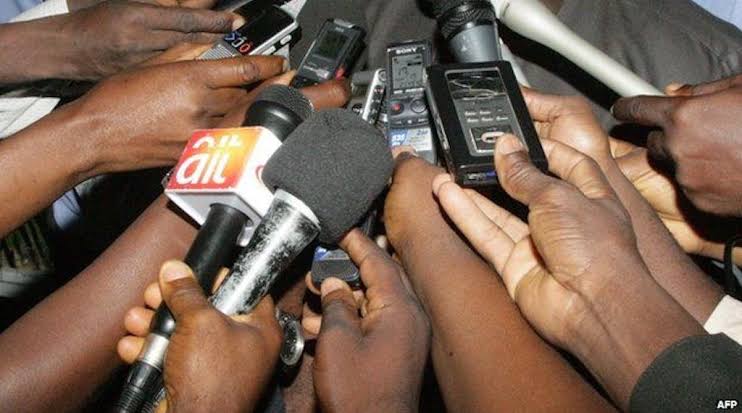
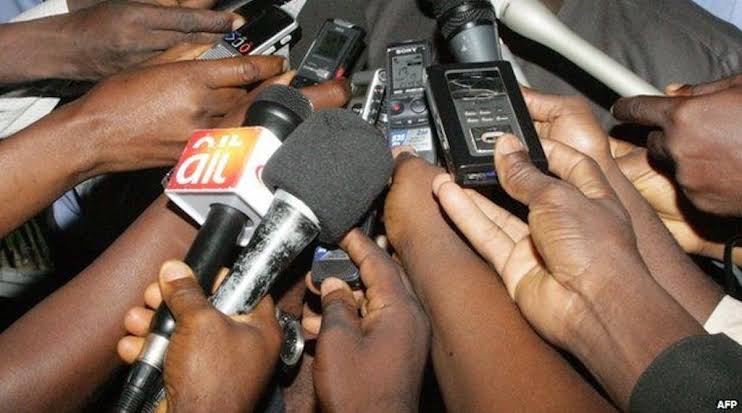
The Centre for Journalism Innovation and Development (CJID) has ranked Imo, Bauchi, and Lagos among the most dangerous and hostile states for journalists in Nigeria, highlighting a troubling decline in press freedom at the subnational level.
According to CJID’s latest Openness Index Report released on Thursday in Abuja, Imo State sits at the bottom of the ranking—37th out of 36 states and the FCT—with a dismal score of 40.70 per cent. Bauchi followed closely at 35th with 42.69 per cent, while Lagos, one of the country’s media hubs, placed a distant 22nd with 48.93 per cent.
The report, presented by Professor Victor Ayedun-Aluma of the University of Jos, a media scholar and professor of Mass Communication and Social Change, assessed the performance of Nigerian states in upholding press freedom and ensuring access to information.
According to the findings, the environment for journalists in several states remains repressive, marred by intimidation, arrests, harassment, and lack of transparency from state actors.
The report specifically attributed Lagos’ poor ranking to repeated clashes between journalists and security operatives, restricted access to public records, and multiple cases of harassment during protest coverage and political events.
Following Imo in the bottom tier were Ebonyi (41.90%), Nasarawa (43.65%), Anambra (44.68%), Sokoto (45.22%) and Kaduna (45.72%).
In contrast, Cross River State, once infamous for persecuting journalists, surprisingly emerged as the most improved and ranked first with 70.40 per cent, earning praise for increased openness and a relatively safer working environment for media professionals. Ondo (63.72%), Delta (63.03%), Katsina (57.51%), Ekiti (57.09%), and Gombe (56.05%) followed in the top tier.
“The findings expose the uneven and often hostile landscape of media freedom in Nigeria,” Prof. Ayedun-Aluma noted. “While the federal government often receives the spotlight for press repression, the report reveals that the real battles for media freedom are being fought at the subnational level.”
He stressed the need for legislative reforms, greater transparency, and a culture of respect for the press at the state level.
The 2024 Subnational Report titled “State of Press Freedom in Nigeria” assessed indicators such as access to information, harassment cases, transparency of government institutions, and legal frameworks that affect journalism.
CJID placed the national average for press freedom at a modest 50.1 per cent, reflecting an overall fragile environment for media practice.
The report called on state governments to adopt or improve Freedom of Information laws, provide better training for law enforcement officers on handling journalists, and create independent media ombudsman structures to handle complaints.
The study also found that states in the South—particularly the South-South region—generally performed better in terms of press freedom, a trend linked to growing digital literacy, civic engagement, and stronger media presence. However, CJID warned that no state in Nigeria had yet achieved a truly ideal press freedom environment.
CJID’s CEO, Mr. Dapo Olorunyomi, said during the presentation that openness is not a luxury but a democratic necessity.
“Development that ignores liberties will not endure, and democracy without transparency is a hollow shell,” he said.
He described the Openness Index as “a mirror held up to our institutions, our governance, our civil space, and to ourselves,” urging Nigerians to use its findings as a foundation for advocacy and reform.
“No index alone can safeguard democracy,” Olorunyomi added. “Only people can—citizens who take these findings and transform them into action.”
Also speaking, the Ambassador of the Netherlands to Nigeria, Bengt Van Loosdrecht, described the current climate for journalism in Nigeria as worrying, citing the country’s slide in the World Press Freedom Index from 112 to 122.
“In just under a year of living here, I’ve seen a country rich with bold voices and brilliant minds, but the space for these voices to thrive is shrinking,” he said.
Loosdrecht emphasized that a free press is the “backbone of democracy” and warned that legal threats, surveillance, and harassment were choking that backbone globally and in Nigeria.
“The CJID report is more than a document—it’s a tool for smarter policymaking, stronger advocacy, and data-driven reform,” he said.
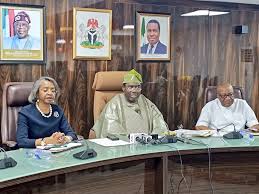
The event was attended by media stakeholders, civil society representatives, and government officials, all of whom echoed the need to preserve and expand civic space in Nigeria.