

Air Peace Pilots Tested Positive for Alcohol, Cabin Crew for Cannabis After Port Harcourt Incident — NSIB

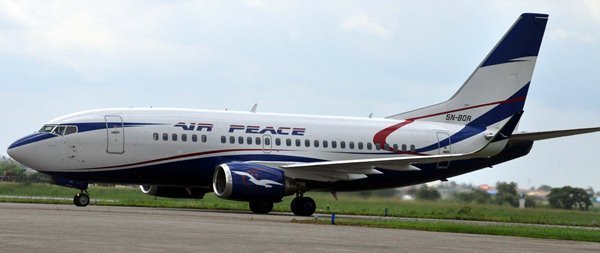
The Nigerian Safety Investigation Bureau (NSIB) has revealed that two Air Peace pilots tested positive for alcohol, while a member of the cabin crew tested positive for cannabis, following a serious runway incident involving one of the airline’s Boeing 737 aircraft at Port Harcourt International Airport on July 13, 2025.
The disclosure was contained in the bureau’s preliminary report signed by its Director of Public Affairs and Family Assistance, Mrs Bimbo Olawumi Oladeji, and released today.
According to the NSIB, the aircraft, a Boeing 737-524 operating a scheduled domestic flight from Lagos to Port Harcourt with 103 passengers and crew, experienced an unstabilised final approach before touching down far beyond the recommended zone on Runway 21.
The bureau explained that the aircraft touched down 2,264 metres from the runway threshold, a distance that significantly exceeded safety margins, and eventually came to a complete stop 209 metres into the clearway.
Though the jet veered off the runway, all passengers and crew disembarked safely, and no injuries or damage were reported.
Toxicological screenings conducted on the crew at the Rivers State Hospital Management laboratory in Port Harcourt confirmed the presence of ethyl glucuronide, a biomarker indicating recent alcohol consumption, in both the Captain and First Officer.
In addition, one cabin crew member tested positive for tetrahydrocannabinol (THC), the psychoactive compound in cannabis.
While the bureau acknowledged that runway incursions are usually caused by factors such as pilot error, miscommunication, or technical faults, the discovery of substance use has now added another dimension to safety concerns in Nigeria’s aviation sector.
Further details showed that while the aircraft appeared stable at 1,000 feet above ground level, it drifted above the glideslope after autopilot disconnection at 500 feet.
The First Officer reportedly suggested a go-around, but the more experienced Captain, with over 10,000 flight hours on type, chose to continue landing. By contrast, the First Officer had fewer than 900 flight hours.
This imbalance in cockpit authority has been flagged by the NSIB as a critical factor under review.
In its preliminary safety recommendations, the bureau directed Air Peace to strengthen crew resource management training, particularly on handling unstabilised approaches and go-around decision-making, and to reinforce internal monitoring procedures to ensure crew fitness-for-duty before every flight dispatch.
The NSIB stressed that these findings are preliminary and subject to further analysis as part of its human performance and safety management investigations.
The final report is expected to provide a comprehensive account of the factors leading to the incident.