Shettima returns after UNGA 81, pushes Nigeria’s case for UN reform
… Delivers Tinubu’s message demanding permanent African seats on Security Council

… Rallies support for education financing, mineral value addition, fairer global order
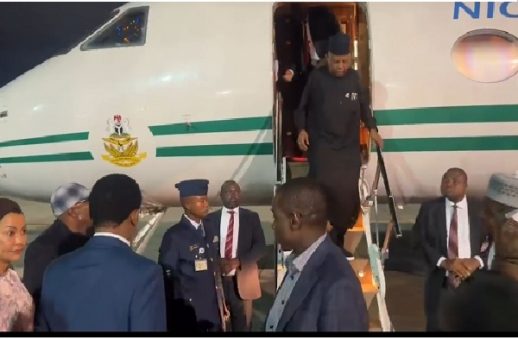
Vice President Kashim Shettima has returned to Nigeria after leading the country’s delegation to the 81st Session of the United Nations General Assembly (UNGA) in New York, United States, where the Federal Government renewed its push for reforms of the global governance and financial systems.
Shettima, who represented President Bola Ahmed Tinubu at the annual gathering of world leaders, used the engagements to advance Nigeria’s demand for permanent African representation on the UN Security Council, fairer development financing, stronger climate support and greater economic opportunities for developing countries.
The Vice President had departed Abuja on September 20 on the mandate of the President to lead Nigeria’s delegation to the General Assembly.
His return was announced on Monday by his Senior Special Assistant on Media and Communications, Stanley Nkwocha.
The Presidency had earlier confirmed that Tinubu delegated Shettima to represent him at the UN gathering.
At the General Debate, Shettima delivered Tinubu’s National Statement, restating Nigeria’s position that the architecture of global governance must be reformed to reflect contemporary realities, particularly by giving Africa permanent representation on the Security Council.
Nigeria also pressed for reforms to the international financial system, increased climate financing and deeper multilateral cooperation to address development, security and other challenges confronting developing economies.
Beyond the General Debate, Shettima participated in the Third High-Level Roundtable of the Africa Minerals Strategy Group, where Tinubu challenged African countries to break away from the longstanding model of exporting raw minerals without capturing sufficient value from their natural resources.
The President’s position, delivered at the meeting, was that African countries should deepen local processing, refining, manufacturing and other forms of value addition to create jobs, strengthen domestic industries and retain a greater share of the economic benefits from the continent’s mineral wealth.
Shettima also represented Nigeria at a high-level education financing event co-hosted by Nigeria and Italy, where he reaffirmed the administration’s position that education remained a strategic investment in productivity, human capital development and long-term national prosperity.
At the event, Nigeria backed the Global Partnership for Education’s $5 billion financing campaign, underscoring the need for stronger international investment in education, particularly in developing countries facing significant financing gaps.
The Vice President also met Nigerians in the Diaspora, urging them to deploy their investment, professional expertise and international networks towards Nigeria’s development.
According to the Presidency, Shettima held engagements with the new leadership of the Economic Community of West African States Commission and met United Nations Deputy Secretary-General Amina Mohammed as part of Nigeria’s diplomatic consultations on the margins of the Assembly.
Across the engagements, the Vice President pushed Nigeria’s positions on development financing, regional integration, economic cooperation, technology, peace and security, while reiterating the Tinubu administration’s demand for a more representative and equitable international order.
Shettima’s participation at the UNGA came while Tinubu was on a working vacation in Europe.
The President left Nigeria on August 30 for London before proceeding to Paris, France, where he held meetings with French President, Emmanuel Macron, and business leaders.
The Presidency had said the President continued to direct affairs of state while abroad and delegated Shettima and other senior government officials to represent him at official engagements during the period.