
From Isaac Ojo
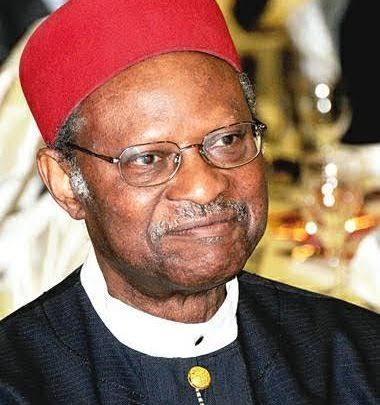
The President-General of Obosi Development Union, ODU Worldwide, Barr. Chimezie Obi, has thrown his weight behind the long-standing call by former Commonwealth Secretary-General, Chief Emeka Anyaoku, for Nigeria to return to a regional system of government.
He described the proposal as the most practical pathway to national stability, economic recovery and true federalism.
Fielding questions from news men in Obosi over the weekend, Obi said Anyaoku’s consistent advocacy over the past fourteen years reflects a deep commitment to Nigeria’s unity and progress, noting that the country’s prevailing security, economic and governance challenges underscore the urgency of comprehensive constitutional restructuring.
According to him, the existing structure of thirty six states and a highly centralised federal system has become financially unsustainable, with enormous public resources expended on governance rather than infrastructure, education, healthcare and productive development.
He maintained that Anyaoku’s proposal for six federating regions, based on the existing geopolitical zones, would reduce the cost of governance, strengthen accountability and encourage healthy competition among the constituent regions.
Obi recalled that Nigeria’s regional arrangement before 1966 stimulated remarkable progress in agriculture, education, commerce and industrialisation, arguing that a return to that model would restore innovation, productivity and, resource management and balanced national development.
He further stated that devolving greater constitutional powers to the regions would enhance security, resource management and service delivery by bringing governance closer to the people and addressing local realities more effectively.
The Obosi Development Union leader stressed that the present constitutional framework concentrates excessive powers at the centre, contrary to the principles of true federalism, and called for reforms that would strengthen the autonomy and responsibilities of the federating units.
He identified constitutional amendment through the National Assembly and State Houses of Assembly as a practical route to achieving regional governance, while also supporting broader national consultations aimed at producing enduring constitutional reforms.
Obi urged traditional institutions, town unions, professional bodies and civil society organisations to mobilise public support for restructuring through sustained advocacy, civic education and constructive engagement with policymakers.
He has emphasised that regionalism should not be misconstrued as a call for disunity or secession but recognised as a constitutional framework capable of promoting efficient governance.