


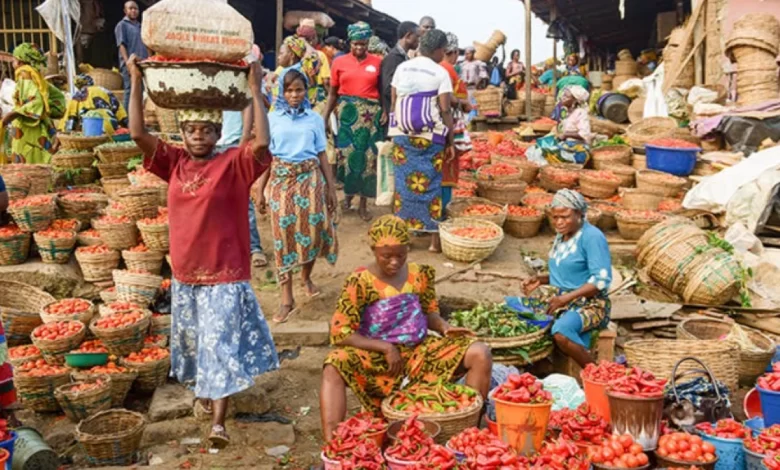
Nigeria’s inflation moderated slightly in June 2026, offering modest relief to households after months of persistent cost-of-living pressures.
According to the National Bureau of Statistics (NBS), the country’s headline inflation rate declined marginally to 15.91% in June from 15.93% recorded in May, while food inflation remained elevated at the national level, rising to 17.52% from 16.96%, highlighting the continued pressure on household spending despite broader price stability.
While inflation remains a nationwide concern, the impact varies significantly across states.
Data from the NBS shows that some states recorded considerably lower all-items inflation rates than the national average, making them states where the cost of living increased more slowly than in most parts of the country.
The June ranking demonstrates that affordability was broadly spread across Nigeria’s geopolitical zones, as the South-South region accounted for the largest representation with four states out of the ten spots on the list — Cross River, Delta, Edo, and Rivers.
The North-West geopolitical zone contributed three states (Kaduna, Katsina, and Zamfara) to the top ten. North-East and South-East also featured states in the ranking. Notably, no state from the North-Central and South-West was among the ten states with the lowest inflation rates in June 2026.
Below are the 10 states that recorded the lowest all-items (headline) inflation rates in the country, making them the states where cost-of-living pressures were least pronounced during the month. Lower inflation generally indicates slower increases in the cost of living, although it does not necessarily imply that prices are low in absolute terms.
10. Borno – 26.6%
Despite years of security challenges, Borno recorded one of the country’s lowest headline inflation rates at 26.6%, up from 9.6% in May, signaling a sharp acceleration in the overall cost of living.
Food inflation stood at 29.2%, from a negative rate of –6.5% recorded in May, indicating a highly significant and dramatic turnaround in food price dynamics within the state.
Data from NBS revealed that Borno recorded one of the slowest month-on-month food inflation movements in June, indicating improving price stability.
9. Delta – 26.3%
Delta recorded headline inflation of 26.3%, higher than 21.5% in May.
The state has a relatively diversified economic activity spanning agriculture, manufacturing, logistics, and oil-related services.
Food inflation in Delta stood at 30.7%, from 23.8%, indicating food prices continued to rise faster than headline inflation.
8. Cross River – 25.9%
Cross River shared the eighth position with Edo, recording 25.9% headline inflation, while Food inflation stood at 30.4%.
The state has a relatively strong agricultural ecosystem and tourism-related economic activity.
The state is a major producer of cocoa, cassava, rice, and palm products, which impacts local food availability.
7. Edo – 25.9%
Edo posted an all-items inflation rate of 25.9%, up sharply from 7.7% in May, while food inflation in the state reached 32.7%.
While the increase suggests growing cost pressures, Edo still ranked among the states with the lowest inflation nationally in June.
6. Kaduna – 24.7%
Kaduna’s headline inflation rate rose to 24.7% in June from 19.6% in May.
Kaduna has a diversified economy with strong agricultural and manufacturing activities that support local production.
However, food inflation remained elevated at 34.4%, ranked the highest among the ten states.
5. Zamfara – 24.0%
Zamfara recorded a headline inflation rate of 24.0%, remaining among the more affordable states despite ongoing security challenges.
Food inflation in the state stood at 30.8%. Zamfara’s economy remains largely driven by agriculture, which may have helped support local food supply despite ongoing security challenges.
4. Rivers – 23.7%
Rivers maintained relatively lower inflation at 23.7%, though higher than the 19.1% recorded in May.
Food inflation stood at 23.8%, making Rivers one of the three states with the lowest food inflation rates nationwide.
Rivers also benefits from its extensive urban markets and riverine trade networks, which may help support the movement and distribution of goods across the state.
3. Katsina – 21.9%
Katsina recorded a headline inflation rate of 21.9%, up from 14.0% in May, representing one of the sharpest month-on-month increases among the states in this ranking.
Interestingly, Katsina posted the lowest food inflation rate in Nigeria at 19.2% in the review period.
2. Ebonyi – 20.8%
As one of Nigeria’s leading rice-producing states, Ebonyi benefited from its strong agricultural output. The state’s food inflation stood at 27.4%, while headline inflation came in at 20.8%.
The abundant production of rice, yam, cassava, and vegetables continues to provide some insulation against the food inflation shocks experienced elsewhere.
1. Imo – 19.5%
Imo recorded the country’s lowest headline inflation rate at 19.5%, despite an increase from 17.4% in May.
Imo has continued to support smallholder farmers through input distribution programmes and rural road rehabilitation aimed at reducing transportation bottlenecks.
On food inflation, Imo recorded 24.6%, one of the lowest rates nationwide. NBS data also identified the state among those with the slowest food price increases in June.