
Cardoso: Nigeria playing strategic role in Africa’s single currency plan

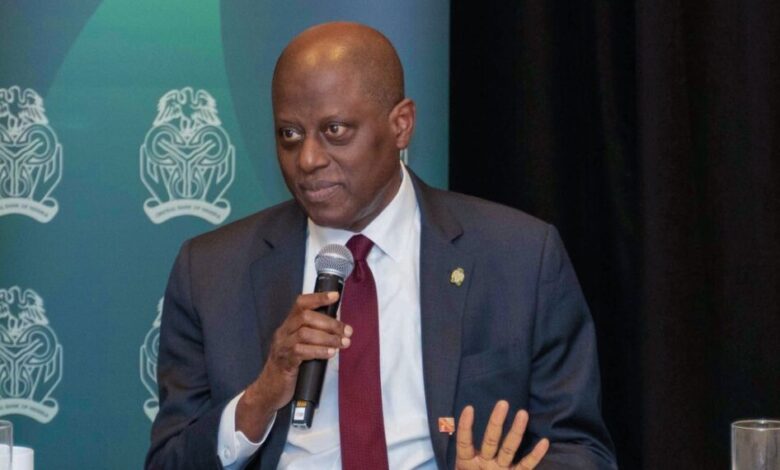
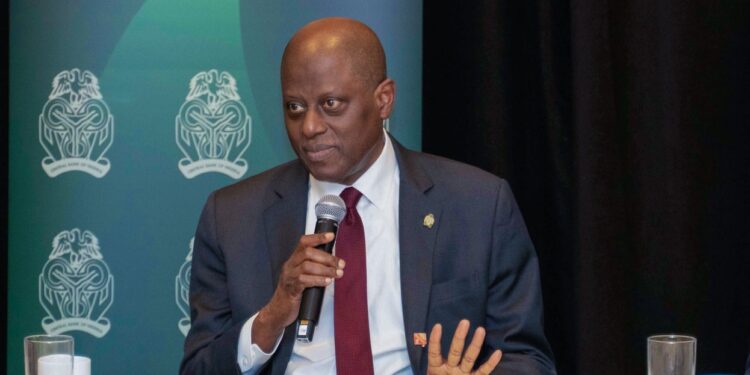
Governor of the Central Bank of Nigeria (CBN), Olayemi Cardoso, has said Nigeria is playing a pivotal role in advancing Africa’s single currency agenda.
In a statement issued on Monday in Abuja, Cardoso noted that Nigeria’s hosting of the African Monetary Institute (AMI) and, eventually, the African Central Bank (ACB), positions the country at the heart of Africa’s emerging monetary union and strengthens its influence in shaping the continent’s single currency framework.
The 39th Ordinary Session of the Assembly of the African Union (AU) recently approved Nigeria’s permanent membership on the Board of the AMI.
The AMI, created under the AU’s financial institutions agenda, serves as a precursor to the African Central Bank, which will be headquartered in Abuja.
What they are saying
Cardoso described the hosting of the AMI and the future ACB as a milestone for both Nigeria and the continent.
According to him, the development will position Nigeria as the epicentre of Africa’s monetary integration efforts and enhance its voice in designing the continent’s single currency architecture.
- “This historic decision marks a significant milestone in Africa’s financial integration journey and further emphasises Nigeria’s strategic role in shaping the continent’s evolving financial architecture,” he said
The CBN governor added that the move represents progress toward macroeconomic convergence, stronger monetary cooperation, and Africa’s long-term vision of financial sovereignty and economic integration.
Cardoso noted that AU Heads of State reaffirmed Nigeria’s standing representation on the AMI Board during the summit, with the position to remain throughout the transitional phase leading to the formal establishment of the ACB.
He also highlighted the roles played by the CBN and the Ministries of Foreign Affairs, Justice, and Finance in securing the milestone.
- “Over the past years, the Bank has led the technical effort that contributed to the Draft AMI Statute, approved at the 5th Extraordinary Meeting of the Specialised Technical Committee on Finance in Abuja.
- “It also provided the AU with the initial hosting facilities and essential logistics for the immediate launch of AMI.”
Backstory
The development marks another step in Africa’s push toward a single currency.
In 2024, President Bola Tinubu reaffirmed Nigeria’s readiness to host the African Central Bank in line with the provisions of the Abuja Treaty.
The Abuja Treaty, formally known as the Treaty Establishing the African Economic Community, was adopted on June 3, 1991, and came into force on May 12, 1994. It laid the groundwork for deeper economic integration across the continent, including the eventual creation of an African Common Market and a single currency.
The proposed African Central Bank is expected to coordinate a common monetary policy and issue a single African currency to accelerate economic integration.
According to the AU, the ACB’s objectives include promoting international monetary cooperation, ensuring exchange rate stability, facilitating a multilateral payments system among member states, and eliminating foreign exchange restrictions that hinder trade.
More insights
Cardoso said the latest milestone reflects years of structural reforms, strategic diplomacy, and consistent technical engagement.
He noted that these efforts have improved Nigeria’s monetary stability, strengthened external reserves management, enhanced banking supervision, and modernised payment systems — developments that have boosted the country’s credibility and influence across Africa.
He added that Nigeria will continue collaborating with the AU Commission, the Association of African Central Banks, member states, and development partners to lay a solid foundation for the ACB and the future African single currency.
The permanent seat granted to Nigeria on the AMI Board is time-bound to the transitional phase and includes a sunset clause upon the formal establishment of the ACB, in line with AU principles of rotation, equity, and regional balance.
What you should know
Nigeria recently secured a permanent seat on the Board of the African Central Bank, reinforcing its position at the centre of Africa’s financial integration efforts.
Abuja will also serve on the AMI’s Technical Convergence Committee — a key platform for harmonising fiscal and monetary policies across the continent as Africa advances toward a unified monetary system.