COP30: Nigeria Urged to Court Green Investments, Not Climate Aid

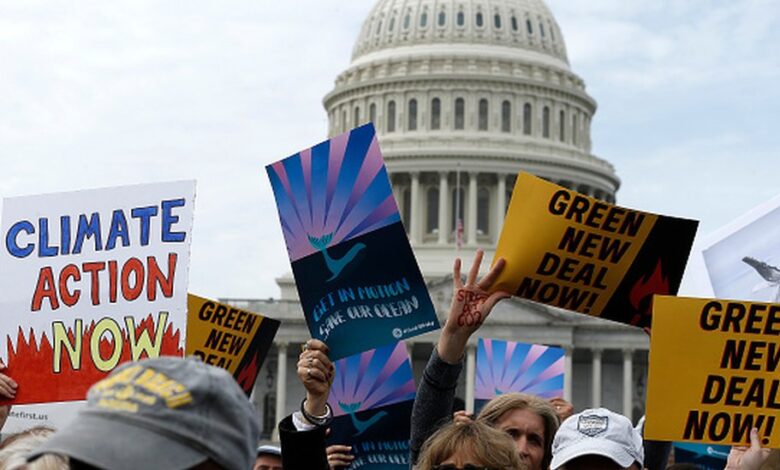
As the world prepares for the 2025 United Nations Climate Change Conference (COP30) in Belém, Brazil, a leading African expert has urged Nigeria and its regional counterparts to abandon the “aid dependency” mindset and instead position themselves as prime investment destinations in the global green economy.
Professor George Nwangwu, Director-General of the Global Centre for Law, Business and Economy (GCLBE) and convener of the Africa Climate Forum, said Nigeria must use COP30 as a platform to attract sustainable investments rather than request climate handouts that often fail to achieve their intended goals.
“No European or American country will bring money to finance climate action in Africa without expecting something in return,” Nwangwu told The Sun in an exclusive interview. “Africa should always market its potential for the green economy rather than beg for funding.”
Nwangwu argued that global political and economic realities have shifted, with donor nations increasingly prioritizing domestic concerns. “Historically, every country is selfish in how it pursues its goals. The Trump era reset expectations, and now European nations are also cutting back on aid. Nobody is giving anything for free anymore,” he said.
According to him, Africa’s climate diplomacy has leaned too heavily on blaming the global North and demanding compensation, while overlooking its own untapped potential. “Even if they bring money, it will never be enough to spark a green revolution. Africa must present itself as a business partner, not a perpetual aid recipient,” he said.
Highlighting the continent’s vast solar resources, Nwangwu noted Africa still imports the bulk of its renewable technology. “We have the best sunlight on the planet, yet solar panels are imported. The minerals for solar batteries are here, but they’re exported for processing abroad. Why not set up manufacturing hubs here? That is where the real jobs and growth lie,” he stressed.
He added that just as global corporations manufacture in China for strategic reasons, Africa could become the next hub for green technology production if governments and investors create the right environment. Such a move, he argued, would bring technical expertise, local jobs, and long-term sustainability.
But Nwangwu emphasized that the private sector must also play a bigger role. “Climate finance is complex. Governments alone can’t do it. Businesses need capacity building to access funding and channel it into tangible results,” he explained.
Backing President Bola Tinubu’s “Buy Nigeria” policy, Nwangwu urged public agencies to prioritize local products even if slightly costlier than imports. “If the Rural Electrification Agency has projects, they should buy Nigerian-made products. That’s how we strengthen local industries and keep value within the economy,” he said.
Looking ahead to COP30, Nwangwu said the Africa Climate Forum will push for a continental agenda that reframes Africa’s role in global climate action—from dependency to leadership. “Instead of saying, ‘Give us money,’ Africa must say, ‘Here is what we have—come and invest.’ The green economy offers better returns than charity, and Africa is open for business,” he concluded.