

US Refiners Turn to Nigerian Crude as Geopolitical Shifts Redraw Global Energy Trade

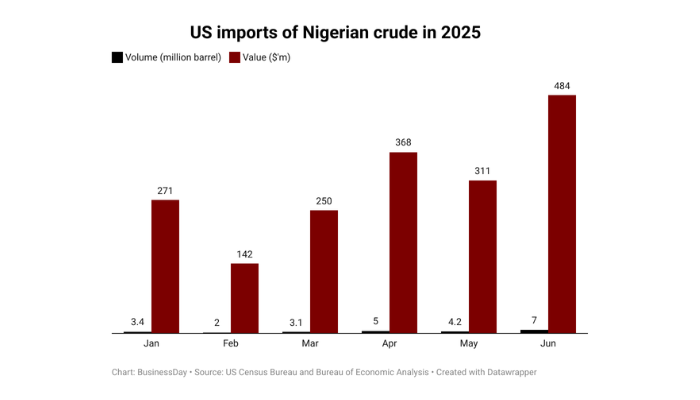
United States refiners are increasingly turning to Nigerian crude oil as geopolitical tensions disrupt traditional energy flows and force a rethink of sourcing strategies.
Industry analysts say the shift is being driven by a combination of Russia’s ongoing conflict with Ukraine, sanctions on Moscow’s energy exports, and tightening supply from the Middle East. Nigeria, Africa’s largest oil producer, has emerged as a viable alternative for US refiners seeking lighter, sweeter crude that is easier and cheaper to refine.
American refiners, particularly those along the Gulf Coast, have long balanced their imports with supplies from the Middle East and Latin America. But with sanctions and instability complicating those supply chains, Nigeria’s Bonny Light and Qua Iboe blends are becoming increasingly attractive options.
Data from energy trackers show that shipments of Nigerian crude to the US have risen sharply in recent months, reversing a decade-long decline that saw American refineries cut back as domestic shale production surged. Analysts say the recent uptick reflects not only short-term disruptions but also a longer-term recalibration of trade routes.
“The geopolitical landscape is shifting, and refiners have to adapt quickly,” said Emily Carter, a Houston-based energy consultant. “Nigeria’s crude is light, low in sulfur, and perfectly suited to US refineries that are designed to process this type of oil.”
For Nigeria, the resurgence of US demand comes at a crucial time. The country has struggled with declining output, oil theft, and underinvestment in infrastructure. But renewed interest from US buyers provides both economic lifeline and a chance to reposition itself in the global market.
Officials in Abuja have welcomed the development, noting that greater US purchases could help stabilize revenues in Africa’s most populous nation. Oil remains Nigeria’s single largest source of foreign exchange and government funding, accounting for more than 70% of exports.
At the same time, industry observers caution that Nigeria must address structural challenges to fully benefit from the shift. Chronic pipeline vandalism, security concerns in the Niger Delta, and regulatory uncertainty continue to weigh on investor confidence and production capacity.
Meanwhile, US refiners are wary of over dependence on any single source. While Nigerian crude offers quality and strategic value, fluctuations in production and politics in West Africa mean refiners are likely to keep a diverse portfolio that includes domestic shale and imports from other regions.
Still, the renewed flow of Nigerian crude into the US highlights how geopolitical upheaval is reshaping global energy markets. With traditional supply chains disrupted, old trade relationships are being revived, giving African producers like Nigeria a fresh opportunity to assert their place in the world’s energy equation.